


Anyone who has ever started a food company has asked themselves the following question: should you dive into food wholesale or opt for food retail? Both paths offer unique opportunities and challenges in a market that’s constantly evolving due to consumer trends, supply chain shifts, and economic factors.
With the global food industry projected to reach trillions in value by 2030, understanding the nuances of wholesale vs retail can make or break your business success.
Read this guide if you don’t know which, between retail and wholesale business models, to choose.
Table of Contents
What is Food Wholesale?
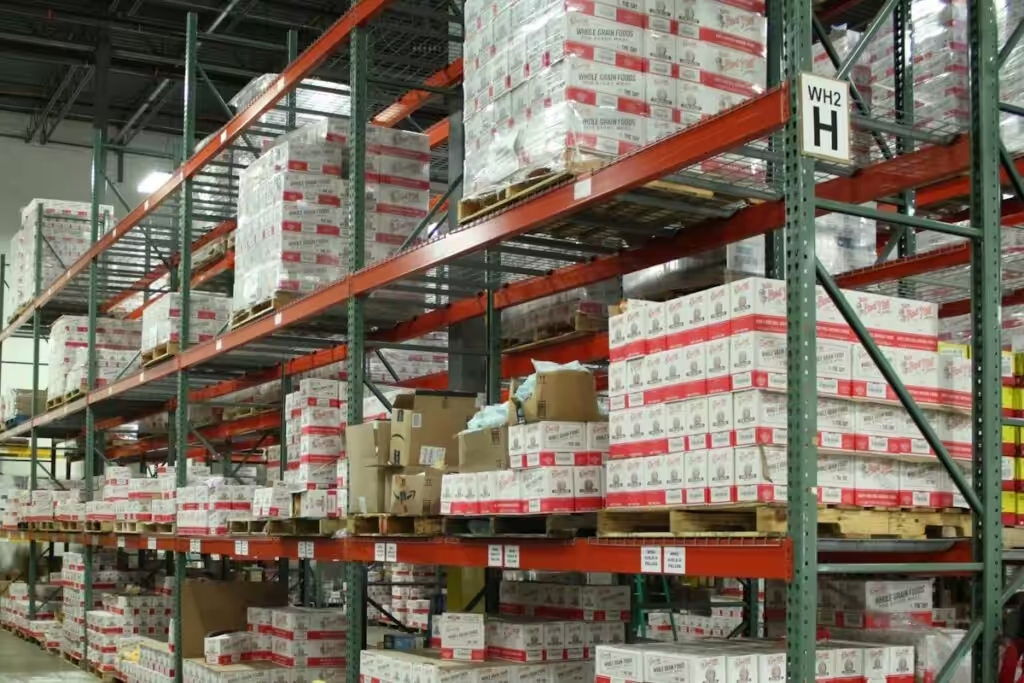
Food wholesale involves purchasing large quantities of food products from producers, manufacturers, or importers and selling them in bulk to retailers, restaurants, institutions, or other businesses. It’s a key link in the supply chain, focusing on distribution rather than direct consumer sales. Wholesalers act as intermediaries, assembling, storing, and transporting goods efficiently to meet the needs of downstream buyers.
Wholesalers typically operate from large warehouses where they manage inventory, handle logistics, and ensure timely delivery. Food wholesalers supply everything from fresh produce to packaged goods to supermarkets and foodservice operators.
Pros of Food Wholesale
- Economies of Scale: Buying and selling in bulk allows for lower per-unit costs, leading to higher potential profits on large volumes.
- Efficient Distribution: Wholesalers streamline the supply chain, reducing the need for multiple transactions between producers and end-users.
- Lower Marketing Costs: Focus is on B2B relationships, so less emphasis on consumer advertising and more on building partnerships.
- Access to Diverse Products: Opportunity to source from various producers, offering a wide range to buyers like restaurants or grocers.
- Stable Demand: Businesses like supermarkets rely on consistent supply, providing more predictable revenue streams.
Cons of Food Wholesale
- Lower Profit Margins: Slim margins due to competitive pricing and bulk discounts; wholesalers often operate on 5-15% margins.
- High Initial Investment: Requires significant capital for inventory, warehousing, and transportation.
- Longer Sales Cycles: Building relationships with retailers can take time, leading to slower initial growth.
- Limited Branding Control: Little influence over how products are presented to end consumers.
- Dependency on Buyers: Economic downturns affecting retailers can ripple back to wholesalers.
What is Food Retail?
Food retail refers to selling food products directly to consumers through stores, markets, or online platforms. This includes supermarkets, grocery stores, convenience shops, and specialty food outlets where customers purchase items for personal consumption. Retailers focus on providing convenience, variety, and an engaging shopping experience, often preparing or displaying products for immediate sale.
Retailers buy from wholesalers or directly from producers and mark up prices to cover costs and generate profit.
Pros of Food Retail
- Higher Profit Margins: Retail markups can be 20-50% or more per unit, allowing for better per-sale profits.
- Direct Customer Interaction: Build brand loyalty through personalized service, promotions, and feedback.
- Flexibility in Pricing and Inventory: Adjust offerings based on consumer trends, like organic or local foods.
- Diverse Revenue Streams: Opportunities for add-ons like prepared foods, loyalty programs, or e-commerce.
- Community Engagement: Local retailers can foster strong community ties, enhancing long-term sustainability.
Cons of Food Retail
- High Operational Costs: Rent, staffing, utilities, and perishables management can eat into profits.
- Intense Competition: From big chains to online delivery services, standing out is challenging.
- Perishable Inventory Risks: Food spoilage leads to waste and financial losses.
- Seasonal Fluctuations: Demand varies with holidays, weather, or economic conditions.
- Regulatory Compliance: Strict food safety and labeling rules add complexity.
Key Differences Between Food Wholesale and Retail
While both are integral to the food supply chain, wholesale and retail differ fundamentally in their operations, target audiences, and strategies.
- Target Customers: Wholesale sells to businesses (B2B), while retail targets end consumers (B2C).
- Quantity and Pricing: Wholesalers deal in bulk at lower prices; retailers sell smaller quantities at higher markups.
- Focus Areas: Wholesale emphasizes logistics and efficiency; retail prioritizes marketing, customer experience, and merchandising.
- Profit Model: Wholesale relies on volume; retail on margins and foot traffic.
- Supply Chain Role: Wholesalers bridge producers and retailers; retailers are the final link to consumers.
These distinctions highlight how wholesale operates behind the scenes, while retail is consumer-facing.
Factors to Consider When Choosing Between Wholesale and Retail
Before deciding, evaluate these key factors:
- Capital Availability: Wholesale demands more upfront for bulk buying and storage; retail might start smaller but requires prime locations.
- Market Research: Analyze local demand, competition, and trends like organic sourcing.
- Supply Chain Access: Can you connect directly with producers? This favors wholesale.
- Risk Tolerance: Retail offers quicker feedback but higher daily variability; wholesale provides stability but slower scaling.
- Skills and Experience: Logistics expertise suits wholesale; customer service shines in retail.
- Regulatory Environment: Consider food safety, licensing, and zoning laws.
| Factor | Wholesale Consideration | Retail Consideration |
|---|---|---|
| Investment | High for inventory/warehousing | Moderate for store setup |
| Profit Margin | Low per unit, high volume | High per unit, variable volume |
| Customer Type | Businesses | Consumers |
| Scalability | Through partnerships | Via multiple locations/e-commerce |
What Activity, Between Food Wholesale and Retail, Should You Choose?
The choice depends on your resources, goals, and market position. If you can afford to buy directly from producers or even become a producer yourself, start with wholesale. This allows you to control costs, secure better margins through bulk dealings, and build a scalable distribution network. Direct producer access minimizes intermediaries, enhancing profitability and supply reliability.
However, if capital is limited or you’re new to the industry, focus on retail first. It provides hands-on experience with consumers, quicker cash flow, and the ability to test products on a smaller scale. Use this as a stepping stone: gather insights, build capital, and plan to expand into wholesale later. For instance, many successful grocers like Whole Foods started retail and integrated wholesale elements over time.
Ultimately, the best strategy is to pursue both activities where possible. A hybrid model—retailing your own branded products while wholesaling to others—maximizes revenue streams, reduces risks, and leverages synergies in the supply chain. Companies like Costco exemplify this by operating as both wholesaler and retailer.
Conclusion
Choosing between food wholesale and retail boils down to aligning with your strengths and vision. Wholesale suits those with strong supply chain capabilities, while retail appeals to customer-focused entrepreneurs. Aim for integration to future-proof your business in this competitive landscape. Conduct thorough research, perhaps consulting industry experts, to make an informed decision.
FAQ
Is food wholesale more profitable than retail?
It depends on scale; wholesale profits from volume, retail from margins.
Can I switch from retail to wholesale?
Yes, many businesses expand this way by building supplier networks.
What are the emerging trends in 2025?
Sustainability, e-commerce, and local sourcing are key drivers.
Looking For a Food Co-Packer?
Most food co-packing companies work with big established brands and require MOQs in the thousands. We built Doypacked.eu to help small food entrepreneurs launch their product quickly and iterate until they find product-market fit.
- Looking for doypack, gusset bags, or tin cans co-packing?
- In need of dry powder mixing?
- Looking for vacuum sealing or nitrogen-flush?